


What is sarcopenia?

Sarcopenia is the progressive, age-related loss of skeletal muscle mass, strength, and physical function,1,2 with diminished muscle performance being the primary defining attribute and decreased muscle mass as a confirmatory marker.1,3–6
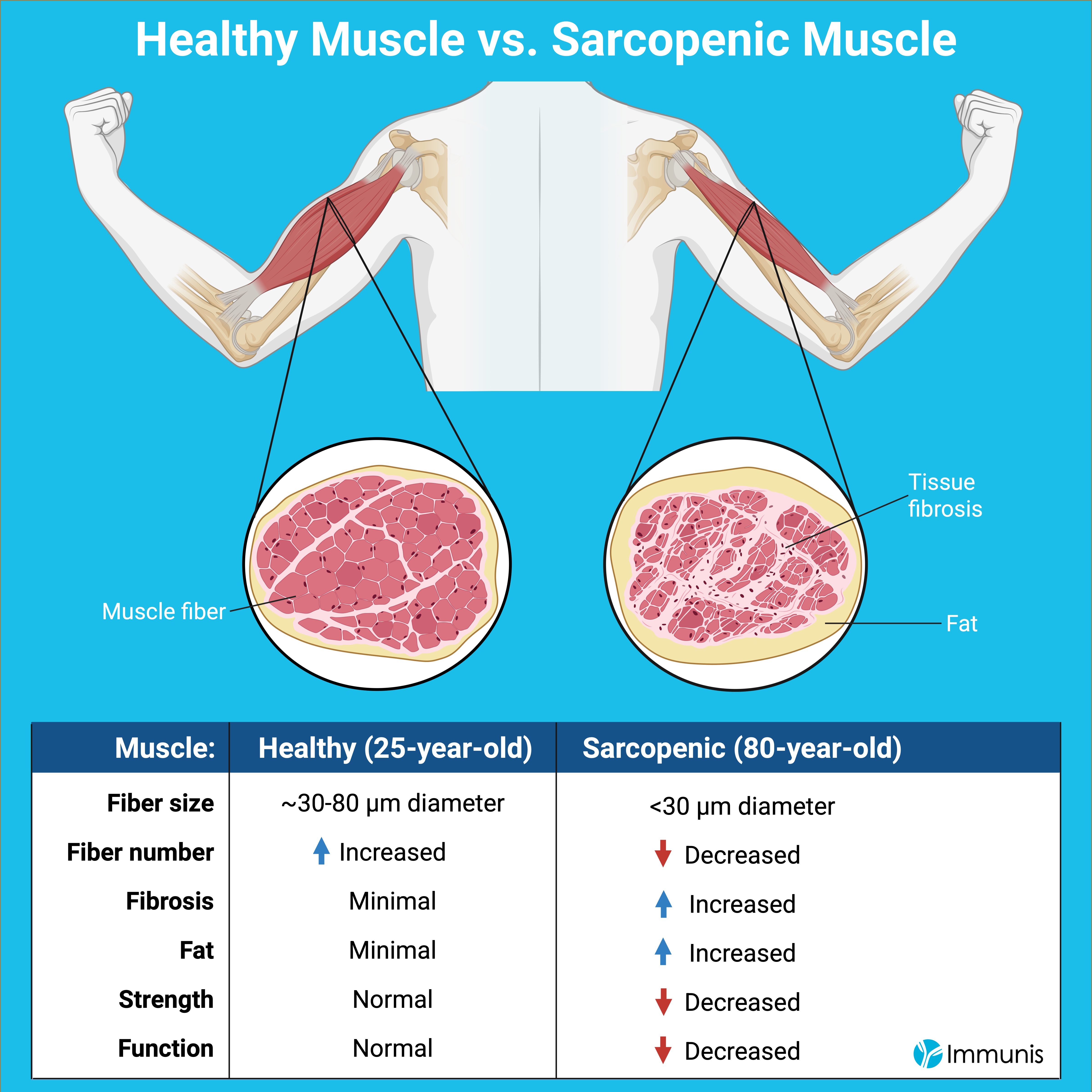
There are two forms of sarcopenia, primary and secondary sarcopenia. Primary sarcopenia is driven by age and secondary sarcopenia is driven by age-independent factors such as nutrition, physical activity, and disease. For more information on these distinct driving factors of sarcopenia, please refer to the resource under the Sarcopenia section titled, What are the causes?

Sarcopenic muscle has both fewer and smaller-sized muscle fibers7,8 with increased intermuscular fat5  and increased fibrosis.9 Fibrosis develops from an accumulation of extracellular matrix components, particularly collagen, and/or a decline in collagen degradation, leading to scarring and hardening of the surrounding muscle tissue.9 Fibrosis contributes to sarcopenia by creating a stiffer, more rigid tissue structure, which restricts muscle fiber movement and impedes muscle regeneration. Consequently, this reduces muscle performance and can cause limited mobility and decreased physical function, which greatly lowers quality of life. Sarcopenia is a major contributor to frailty, disability, and adverse health outcomes. Therefore, not only is it important to recognize early signs of sarcopenia, but it is also important that we find therapeutic approaches to actively reverse and prevent it.

Additional Resources