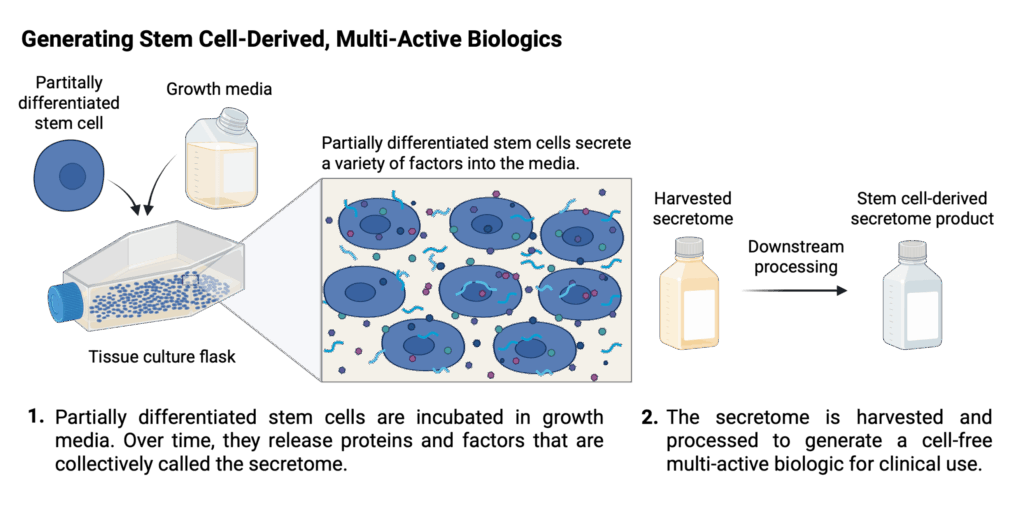
IMM01-STEM represents the balanced set of factors that typically diminish with age. Our therapeutic has the potential to eliminate the effects of age and immune-related diseases by replenishing these critical components that maintain optimal cell and immune responses.
IMM01-STEM's broad repertoire of regenerative factors could have broad therapeutic benefits in several age-related conditions. Based Immunis' preclinical data published in three peer-reviewed scientific journals, IMM01-STEM may positively impact people experiencing muscle loss and metabolic dysfunction.
The first publication in GeroScience investigates treatment with IMM01-STEM in aged mouse models of disuse atrophy. Compared to control mice, IMM01-STEM treatment increases muscle mass and size, and improves grip strength. Additionally, IMM01-STEM increases collagen turnover and the number of muscle stem cells, indicative of enhanced muscle remodeling. These findings demonstrate that IMM01-STEM promotes muscle size and strength following disuse atrophy.
Immunis is completing a Phase 1/2a clinical trial examining the safety, tolerability and preliminary efficacy of IMM01-STEM treatment in sarcopenic elderly with knee osteoarthritis. There have been no reports of serious adverse events (SAEs) associated with our IMM01-STEM treatment in humans. Initial analyses show striking improvements in quality-of-life measurements related to pain, stiff, and physical function. In the 6-min walk test, the patients increased their walking distance and achieved a clinically meaningful improvement in gait speed, an encouraging suggested functional efficacy signal. The team is preparing a manuscript detailing the full results of the investigation.
Age-related loss of muscle mass and function (sarcopenia) associated with excess body fat, referred to as “sarcopenic obesity,” is a global health concern (Donini et al., 2022). There are no interventions to combat weight gain without compromising muscle mass, creating an unmet clinical need. Immunis’ Aging Cell publication investigates the therapeutic impact of IMM01-STEM on muscle and metabolism in aged mice. Compared to control-treated mice, IMM01-STEM increases whole-body lean mass, reduces fat mass and decreases muscle fat. Additionally, there is an increase in muscle fiber area and the number of muscle stem cells, as well as enhanced collagen turnover. Lastly, IMM01-STEM promoted better grip strength and increased overall physical activity.
For additional information, please see the publication below.
Donini, L. M., Busetto, L., Bischoff, S. C., Cederholm, T., Ballesteros-Pomar, M. D., Batsis, J. A., Bauer, J. M., Boirie, Y., Cruz-Jentoft, A. J., Dicker, D., Frara, S., Frühbeck, G., Genton, L., Gepner, Y., Giustina, A., Gonzalez, M. C., Han, H.-S., Heymsfield, S. B., Higashiguchi, T., … Barazzoni, R. (2022). Definition and Diagnostic Criteria for Sarcopenic Obesity: ESPEN and EASO Consensus Statement. Obesity Facts, 15(3), 321–335. https://doi.org/10.1159/000521241
"Stem Cell Secretome Treatment Reduces Adiposity and Improves Glucose Handling During Obesity and Weight Loss in Mice" (Fennel et al., 2025).
Immunis’ publication in Obesity discusses the effects of its investigational therapeutic, IMM01-STEM, in mouse models of obesity. The key findings are as follows:
-
1. IMM01-STEM significantly enhanced weight loss in obese mice by reducing the percentage of whole-body fat while increasing lean mass.
-
2. IMM01-STEM significantly reversed liver steatosis and fibrosis in aged mice on a high fat diet, to levels similar to that of healthy controls.
-
3. IMM01-STEM provided major metabolic benefits during weight loss, including better glucose tolerance and lower fasting insulin levels, with treated mice achieving metabolic profiles similar to healthy controls.
-
4. IMM01-STEM preserves muscle mass and enhances muscle quality by increasing muscle fiber size, increasing blood capillary density, and reducing fibrosis.
These data provide a promising basis for additional investigations of IMM01-STEM in supporting metabolic and tissue health during obesity and weight loss in humans. This research compliments the findings from Immunis’ two additional published preclinical studies in GeroScience and Aging Cell, which show a reversal of deficits in aged skeletal muscle resulting in leaner, higher quality tissue with lower fat and fibrosis, thicker myofibers, greater overall strength, improved whole-body metabolism, reduced adiposity, and better balance and coordination.
For additional information, please see the publication below.